

How to Become a Journeyman Electrician (2026 Guide)
Last updated: July 2026
How do you become a journeyman electrician?
There is no national journeyman license — every state sets its own rules, and a few leave it to cities entirely. What is near-universal:
- Be 18+ with a high school diploma or GED
- Complete a 4- to 5-year apprenticeship — about 8,000 hours on the job plus 576–900 classroom hours
- Pass a state or local exam built on the National Electrical Code
- Pay the license fee, then renew on a set cycle
Journeymen typically earn $62,000–$100,000 a year. Your license is issued by one state, so check reciprocity before assuming it travels.
“Journeyman” is the rank where the trade stops supervising you. It is the point at which you can work unsupervised, sign off your own work, and charge a licensed electrician’s rate rather than a trainee’s.
The confusing part is that no two states define it identically. This guide covers what is consistent across the country, where the rules genuinely diverge, and how to find the answer for the state you actually work in.
- There Is No National Journeyman License
- What a Journeyman Electrician Actually Is
- The Apprenticeship: Hours, Classroom, and Pay
- The Journeyman Exam
- How the Rules Differ by State
- Reciprocity: Taking Your License Across State Lines
- Renewal and Continuing Education
- What Journeyman Electricians Earn
- Your Step-by-Step Checklist
- Frequently Asked Questions
- The Bottom Line

There Is No National Journeyman License
This is the single most useful thing to understand before you start. Electrician licensing in the United States is handled at the state level, and in some states at the city or county level. There is no federal license and no national registry. The U.S. Bureau of Labor Statistics notes that licensing requirements vary by state and locality.
Three patterns exist:
- Statewide licensing. One state agency issues the journeyman license, and it is valid everywhere in the state. Virginia works this way, for example.
- Statewide certification with a different name. California certifies individual electricians by category rather than issuing a “journeyman license” as such.
- Local licensing only. Some states license electrical contractors at the state level but leave individual journeyman licensing to municipalities, so the rules change between cities.
Because of that third pattern, “how do I get my journeyman license” has no single answer. Start with your own state — our state licensing guides cover the responsible authority for each one.
What a Journeyman Electrician Actually Is
A journeyman has finished an apprenticeship and passed a licensing exam. In practice, that means:
- You work unsupervised. An apprentice must be supervised; a journeyman does not.
- You can supervise apprentices. Most states set a ratio of apprentices per licensed electrician.
- You generally cannot pull permits or run a contracting business. That is usually reserved for a master electrician or a licensed electrical contractor.
That last distinction catches people out. Reaching journeyman does not mean you can take jobs in your own name — it means you can do the work without someone watching.
The Apprenticeship: Hours, Classroom, and Pay
Nearly every state routes you through an apprenticeship, and the shape of it is consistent even where the numbers differ slightly:

- About 8,000 hours of on-the-job training, which works out to roughly four years of full-time work.
- 576 to 900 classroom hours, typically 144–200 per year, covering theory, code, safety, and calculations.
- You are paid throughout. Apprentice wages start at a percentage of the journeyman rate and step up each year.
You can enter through a union or non-union program. Union apprenticeships run through IBEW locals and the electrical training ALLIANCE; non-union programs run through Independent Electrical Contractors or Associated Builders and Contractors. The U.S. Department of Labor’s Apprenticeship Finder lists registered programs by location.
The Journeyman Exam
Once your hours are signed off, you sit the licensing exam. Across states, the format is broadly similar: open book, computer-based, multiple choice, and built on the National Electrical Code. Most require around 70% to pass.
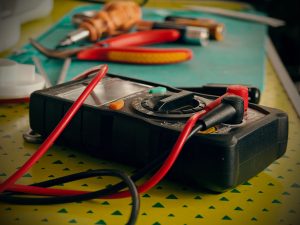
The skill being tested is not memorization — it is how fast you can find the right section of the code book under time pressure. Our guide to what to expect on the journeyman exam covers question counts, topic weighting, what you may bring into the room, and retake rules in detail.
Your state names the exam vendor and the code edition it is written against, so confirm both with your licensing authority before you book — states adopt new code editions on different schedules.
How the Rules Differ by State
Four states illustrate how differently this can work. Each of these is a live licensing authority you can check directly:
| State | What the credential is called | Who issues it | Worth knowing |
|---|---|---|---|
| Virginia | Journeyman (Tradesman license) | DPOR Tradesmen Program | Clean statewide ladder: apprentice, journeyman, master, all through one agency |
| California | Certified General Electrician (and other categories) | DIR Electrician Certification Unit | Certifies by category rather than a single “journeyman” title |
| Alaska | Electrical Journeyman Certificate of Fitness | DOLWD Mechanical Inspection | One of the few states publishing an explicit reciprocity list |
| Ohio | No statewide journeyman license | OCILB licenses electrical contractors only | Individual licensing is municipal — Toledo issues its own journeyman license |
Note the pattern: the work is the same trade everywhere, but the credential’s name, issuing body, and hour requirements are all state decisions. Never assume a requirement you read about one state applies to another.
Reciprocity: Taking Your License Across State Lines
Because your license comes from one state, moving usually means dealing with that state’s rules on recognizing an outside credential. Some states publish formal reciprocity agreements; others make you re-apply or re-test.
Alaska is a useful worked example because it lists its agreements openly. Its Department of Labor and Workforce Development states that Alaska holds reciprocal agreements for Electrical Journeyman with Arkansas, Colorado, Iowa, Minnesota, Montana, Nebraska, New Hampshire, New Mexico, North Dakota, Oklahoma, South Dakota, Texas and Wyoming.
Two practical points. Reciprocity is specific to a pair of states, not a general status — and these lists change, so confirm with the receiving state before you move rather than after.
Renewal and Continuing Education
A journeyman license is not permanent. Every state sets a renewal cycle, and most attach continuing-education hours to it — typically code-update training, since the National Electrical Code is revised on a recurring cycle and states adopt new editions at different times.
The specifics vary too much to generalize safely: renewal periods, hour counts, and which providers count are all state decisions. Check your own authority — for example, Virginia DPOR publishes its tradesman renewal and continuing-education requirements directly.
Whatever your state requires on paper, code-update training is worth doing on its own merits. You are inspected against the edition your jurisdiction has adopted, not the one you trained on.
What Journeyman Electricians Earn
The U.S. Bureau of Labor Statistics reports a median wage of $63,190 a year for electricians as a whole (SOC 47-2111, May 2025 release) — roughly $30 an hour. The lowest 10% earn under $42,640; the top 10% earn more than $108,510.

Licensed journeymen sit above the bottom of that range, typically $62,000 to $100,000 depending on state, specialty, and whether the work is union. Three things move the number most:
- Union scale versus open shop. Union agreements set the rate and add pension and health contributions on top of the hourly figure.
- State and metro. High-cost, high-demand states pay well above the national median.
- Specialty. Industrial and controls work generally pays above straight residential.
BLS also projects 9% employment growth for electricians from 2024 to 2034, faster than the average across all occupations.
Your Step-by-Step Checklist
The whole path, in order:
- Identify your licensing authority first. State agency, or city if your state licenses locally. Everything below depends on this.
- Meet the basics — 18 or older, high school diploma or GED, and usually a year of high school algebra.
- Get into an apprenticeship through a union local, a non-union program, or the Apprenticeship Finder.
- Log your hours and keep your own records. Roughly 8,000 on the job; do not rely solely on an employer to track them.
- Complete the classroom component — usually 144 to 200 hours a year.
- Confirm your exam vendor and code edition, then apply and sit the exam.
- Pay the fee and collect your license.
- Diary your renewal date and whatever continuing education your state attaches to it.
- Check reciprocity before relocating — confirm with the receiving state, not the one you are leaving.
Frequently Asked Questions
The Bottom Line
The journeyman path is long but unusually predictable: about four to five years, paid throughout, ending in an open-book exam you can prepare for. The part that trips people up is not the difficulty — it is assuming the rules are national when they are not.
So do one thing before anything else: identify the exact body that licenses electricians where you intend to work, and read their requirements directly. Every hour you log and every dollar you spend on training should be aimed at that authority’s rules, not a general description of the trade. Get that right, and the rest is just time on the tools. Godspeed!
Sources & method: National wage figures are from the U.S. Bureau of Labor Statistics Occupational Employment and Wage Statistics for Electricians, SOC 47-2111, May 2025 release; the employment-growth projection is from the BLS Occupational Outlook Handbook, a separate program. State examples link directly to each licensing authority. The $62,000–$100,000 journeyman range is our own estimate derived from that percentile data plus current union and market scales — BLS does not publish a separate wage series for journeymen. Apprenticeship hour figures are typical values; your state sets the binding numbers.
This article is provided for informational and educational purposes only. It is not legal, licensing, or career advice, and Electrician Authority is not a licensing authority, school, or employer. Licensing rules, fees, and wage data change — always confirm current requirements directly with your state or local licensing authority before making decisions.


Get the Free Monthly Briefing
Licensing news, study tips, and the gear worth knowing about — plus a free Apprentice Logbook when you join. One useful email a month, no spam.
Join Free →