
The Best Books for Electricians (2026 Guide)
Last updated: August 2026
Quick answer: the books worth buying, by stage
- Buy first, whatever your stage: Ugly’s Electrical References — the pocket book almost every electrician carries.
- The one you cannot skip: the National Electrical Code — in the edition your jurisdiction has actually adopted, which is often not the newest one.
- Best first theory book: Delmar’s Standard Textbook of Electricity, or Electrical Studies for Trades if you want something lighter.
- Best exam prep: Mike Holt’s exam-preparation set, matched to your state’s code cycle.
- Best free option: your local library’s trade section and the open textbooks below — genuinely free, and legal.
Walk into any apprentice’s truck, and you will find the same two or three books, dog-eared and covered in pencil. Walk into a first-year’s, and you will often find a stack of things that were bought on a recommendation and never opened again.
This guide is about the difference. Below are the books that earn their place at each stage of the trade, what each one is actually for, which edition to buy, and — just as usefully — which ones you can skip until later.
The books most electricians
actually own
Five titles come up again and again, across apprenticeship programs, exam-prep courses, and the trade forums. They cover different jobs, so most electricians end up with several rather than choosing between them.
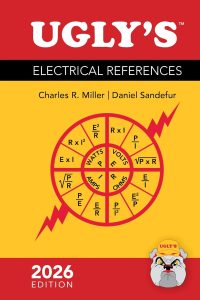
The one to buy first. Ugly’s is a shirt-pocket reference of conduit bends, ampacity tables, motor data, formulas, and wiring diagrams — the things you look up on a ladder rather than read in an armchair. It is not a study book and will not teach you theory. It is the book you reach for when you need a number in ten seconds.
Verdict: buy it at any stage, and replace it when your jurisdiction moves to a new code cycle.
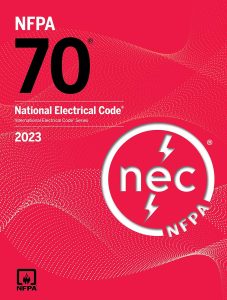
The NEC is not optional, and it is not a book you read cover to cover. It is the rulebook your inspector works from, and the document your licensing exam is written against. Buying it is less about reading and more about learning to navigate it quickly, which is a skill in its own right.
Verdict: essential — but read the edition section below before you order, because the newest edition is frequently the wrong one to buy.
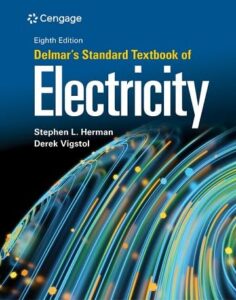
The theory textbook many apprenticeship programs assign. It builds from atomic structure through AC and DC theory, motors, transformers, and controls, with practice problems along the way. It is a genuine textbook — dense, methodical, and far more thorough than a wiring guide.
Verdict: the best single choice if you want to understand why rather than memorize. An older used edition is fine; the fundamentals have not moved.
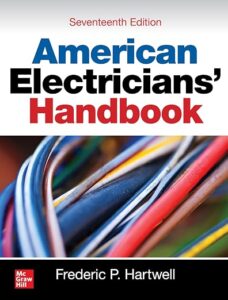
A career-long reference rather than a learning book — hundreds of pages of tables, methods, and equipment data covering far more ground than a pocket guide. It is heavy, expensive, and the sort of book that lives on a shelf in the shop rather than in a tool bag.
Verdict: excellent, but not a first purchase. Worth it once you are working independently and hitting problems your pocket reference cannot answer.
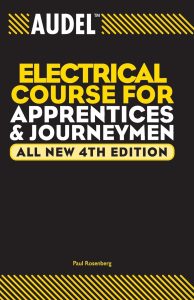
An older, plainer-spoken course book that walks through the fundamentals with plenty of worked examples. It is often recommended by electricians who found the big textbooks heavy going, and used copies are inexpensive.
Verdict: a good second theory book, or a first one if Delmar’s feels like too much.
Books for passing the licensing exam
Exam prep is a different purchase from theory. These books are written against a specific code cycle, so they date faster than anything else on this page — buy them when you are close to sitting the exam, not years ahead.
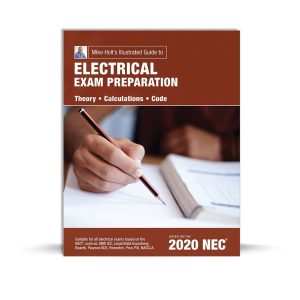
Mike Holt Enterprises is the best-known name in NEC exam training, and the illustrated exam-prep set is built around thousands of code-referenced practice questions. The illustrations are the real value: they show what a rule looks like installed, which is how most people finally understand it.
Verdict: the strongest exam-prep option, provided you buy the version matching your state’s adopted code cycle.
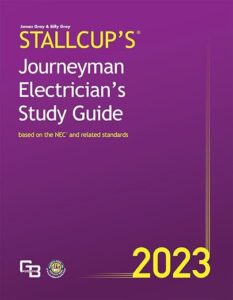
A drill-heavy study guide organized around the exam rather than the trade, with question sets that mirror the format of most journeyman tests. Drier than Mike Holt’s material, but some people prefer the relentless practice.
Verdict: a solid alternative or supplement. The same edition warning applies.
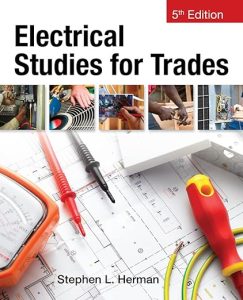
Stephen Herman’s book sits between a textbook and a primer — lighter than Delmar’s and aimed at trades students who need the theory that matters on-site without a full engineering treatment. Single-phase versus three-phase power, AC and DC theory, capacitive and inductive resistance, and motor windings, all in language that makes sense on the job.
Verdict: the gentlest starting point, and a good bridge if theory has not clicked yet.
Reading about code is not the same as finding it under time pressure. Our free NEC practice test drills the navigation half of the exam, which is where most people actually lose marks.
Which book, at which stage
Nobody needs all of these at once. Roughly, this is the order they become useful:
| Book | Best for | What it is for | Buy it when |
|---|---|---|---|
| Ugly’s Electrical References | Every stage | Fast on-site lookups | Day one |
| National Electrical Code | Every stage | The rules themselves | Day one — adopted edition |
| Delmar’s Standard Textbook | Apprentice | Learning the theory properly | First year |
| Electrical Studies for Trades | Apprentice | A lighter theory start | First year |
| Audel Electrical Course | Apprentice | Worked examples, plain language | First year |
| Mike Holt’s exam prep | Exam candidates | Code-referenced practice questions | 3–6 months before the exam |
| Stallcup’s Study Guide | Exam candidates | Exam-format drilling | 3–6 months before the exam |
| American Electricians’ Handbook | Journeyman and up | Deep reference | When the pocket guide runs out |
Which edition should you buy?
This is where most money gets wasted, and almost no book list mentions it. NFPA keeps every edition of the code in print for exactly this reason — because jurisdictions are not all on the same one.
The NEC is republished on a three-year cycle, but your jurisdiction decides when to adopt each edition, and adoption lags publication — sometimes by several cycles. Your inspector enforces the adopted edition. Your licensing exam is written against the adopted edition. Buying the newest code book when your state is two cycles behind means studying rules that will not be on your test and are not yet enforceable where you work.
- Code books and anything code-referenced — the NEC itself, Ugly’s, and every exam-prep guide are tied to a cycle. Confirm which edition your state or city enforces before you order.
- Theory textbooks — not tied to the code at all. Ohm’s law has not been revised. A used copy an edition or two old is a legitimate way to save money.
- Reference handbooks — mostly cycle-independent, though newer printings pick up changes in equipment and methods.
Your state licensing board publishes the adopted edition, and our state-by-state guides point you at the right authority for your jurisdiction. Two minutes of checking can save an eighty-dollar mistake.
Free and low-cost resources worth having
Plenty of people search for free electrician books, and there are legitimate options — alongside many pirated copies that are illegal and often out of date.
- Your public library. The most underused option in the trade. Many libraries carry current code books, and interlibrary loan reaches the rest.
- Open textbooks. Basic Electricity from BCcampus is a full, openly licensed textbook covering atomic structure, units, and measurement.
- University course material. MIT OpenCourseWare publishes circuits and electronics courses free, though it is engineering-oriented rather than trade-oriented.
- Manufacturer and association guides. NFPA and major equipment manufacturers publish free technical material and safety guidance.
- Free video instruction. Mike Holt and Electrician U both publish substantial free libraries on YouTube.
One caution: any site offering the NEC or a current textbook as a free PDF download is almost certainly distributing it without permission, and those copies are usually several cycles out of date. That is a bad trade for a document you will be tested on.
How to actually get value from a code book
A code book that sits in the truck unopened has taught nobody anything. The electricians who navigate it fastest all did roughly the same thing:
- Tab it. Adhesive index tabs on the articles you use most turn a five-minute hunt into a ten-second one.
- Learn the structure before the content. Chapters 1–4 are general rules, 5–7 are special conditions, and Chapter 9 holds the tables. Knowing roughly where a rule lives beats memorizing its exact location.
- Work from the index and the table of contents deliberately, until you stop needing them.
- Practice against a timer. Open-book exams are won on speed, not recall.
- Write in it. Cross-reference notes in the margins are why an experienced electrician’s code book is faster than a clean one.
- Replace it when your jurisdiction adopts a new cycle, and re-tab the new copy.
Keep your hours where you can prove them.
One more book belongs on this list, and in the interest of being straight with you, it is our own. The Electrician Authority Apprentice Logbook is a 55-page paperback with a row for every workday — hours, type of work, permit number, and the name and license number of the electrician who supervised you — plus a supervisor sign-off at the end of each month and employer affidavit pages at the back. The same logbook is available as a free printable PDF when you join the newsletter.
Beyond books
Books are the cheapest way to learn the trade, but they are not the only way. A few options worth knowing about:

- Continuing-education providers. RedVector and 360training run state-approved CE courses, which most licenses require for renewal.
- Structured distance programs. Penn Foster offers a residential electrician diploma, useful as preparation but not a substitute for a registered apprenticeship.
- Apprenticeship training centers. Joint IBEW–NECA programs such as local JATCs combine paid work with classroom instruction, and are the lowest-cost route into the trade by a wide margin.
Frequently asked questions
The cheapest tool you will ever buy
A code book and a decent textbook cost less than a single day’s wages, and they pay back for the rest of your career. The mistake is not spending too little — it is buying the wrong edition, or buying eight books when three would have done.
Start with a pocket reference and the code edition your jurisdiction actually enforces. Add a theory textbook as you learn. Buy exam prep when the exam is in sight. Everything else can wait until you know you need it.
And before you spend anything, check your library and the open textbooks above. Some of the best material in this trade costs nothing. Godspeed!
This article is for informational and educational purposes only. Book editions, prices, and availability change; confirm details with the publisher or retailer before buying. Licensing requirements and adopted code editions are set by your state or local authority — always confirm with them before making decisions about your training or your license.


Get the Free Monthly Briefing
Licensing news, study tips, and the gear worth knowing about — plus a free Apprentice Logbook when you join. One useful email a month, no spam.
Join Free →