
How to Become an Electrician in Illinois in 2026:
The Ultimate Guide
Last updated: March 2026
Becoming an electrician in Illinois is a journey that offers both a challenge and a significant reward. Unlike many other states that have a centralized, statewide licensing board, Illinois operates under a decentralized system. This means that your path to becoming a licensed professional will be guided by the specific rules of the city or county where you intend to work.
Our comprehensive guide will walk you through every step of the process in 2026, from your first day of training to obtaining your contractor’s license. Whether you are a high school student looking ahead or a professional seeking a career change, this article provides the current facts, fees, and forms you need to succeed in the Land of Lincoln.
- The Landscape of Electrical Licensing in Illinois
- Step 1: Lay the Educational Foundation
- Step 2: Choose Your Training Path (Apprenticeship)
- Step 3: Accumulate Your Experience Hours
- Step 4: Navigating Local Licensing Requirements
- Supervising Electrician License Requirements
- Step 5: Understanding License Reciprocity
- Continuing Education (CE) Requirements
- Final Thoughts for Aspiring Electricians
The Landscape of Electrical Licensing in Illinois
The most important thing to understand about the Illinois electrical trade is that there is no statewide electrician license. While the state may recognize certain apprenticeship standards, the authority to grant a license to perform work rests entirely with local municipalities.
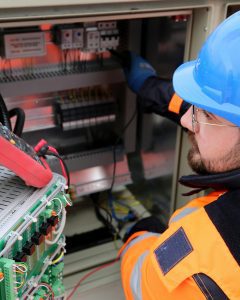
Unfortunately, there is no definitive or comprehensive list of all of Illinois’ municipalities and how they handle electrician licensing. They range from the highly regulated districts (like Chicago) to the more relaxed areas where all they are concerned with is permits for electrical jobs.
As you can plainly see, requirements can vary significantly between larger districts like Springfield and Rockford and smaller, more rural jurisdictions. However, most cities follow a similar structural path: education, apprenticeship, and a competency examination. Whichever city you apply in, the code knowledge being tested is the same, and our free NEC practice test lets you drill it under a timer.
Step 1: Lay the Educational Foundation
Before you can pull a wire or step onto a job site, you must meet basic eligibility requirements. In 2026, almost every apprenticeship program and municipal board in Illinois requires the following:
- Age: You must be at least 18 years old (some programs allow application at 17).
- Education: A high school diploma or GED is mandatory.
- Mathematics: You must show proof of completing at least one full year of high school algebra with a grade of “C” or better.
- Physical Capability: You must be able to perform the physical labor required by the trade, including lifting heavy equipment and working in confined spaces.
Step 2: Choose Your Training Path (Apprenticeship)
Your apprenticeship is your education, both theoretical and practical, for your career. This is an “earn-while-you-learn” model where you receive a paycheck for on-the-job training (OJT) while attending classroom instruction in the evenings or on weekends.
Union Apprenticeships (IBEW/NECA)
The International Brotherhood of Electrical Workers (IBEW) and the National Electrical Contractors Association (NECA) operate Joint Apprenticeship and Training Committees (JATCs) across the state. These programs are highly competitive but offer some of the best pay and benefits in the industry. Below are some specific chapter links to get you started:
- IBEW Local 134 (Chicago & Cook County)
- IBEW Local 193 (Springfield)
- IBEW Local 145 (Rock Island/Moline)

Non-Union Apprenticeships (ABC/IEC)
If you prefer a non-union, merit-based route, organizations such as the Associated Builders and Contractors (ABC) or the Independent Electrical Contractors (IEC) offer U.S. Department of Labor-approved programs.
Trade Schools and Community Colleges
While not a full apprenticeship, completing a certificate program at a school like Midwest Technical Institute or a local community college can give you a head start and may count toward your required experience hours. Be sure to go over all the details with an advisor!
Step 3: Accumulate Your Experience Hours
To sit for a licensing exam in most Illinois jurisdictions, you must document a specific amount of experience. The standard requirement in 2026 is 8,000 hours of supervised on-the-job training, which typically takes four to five years to complete.
During this time, you will work as an “Apprentice” or “Trainee” under the direct supervision of a licensed Supervising Electrician or Contractor. An apprenticeship program through any union or non-union organization will help set you up with a qualified employer. You will gain experience in:
- Residential wiring (outlets, switches, panels)
- Commercial installations (conduit, three-phase power)
- Industrial maintenance (motor controls, PLCs)
- Safety protocols and OSHA compliance
Step 4: Navigating Local Licensing Requirements
Once you have completed your 8,000 hours and classroom training, you are eligible to take a licensing exam. Because Illinois is decentralized, you must apply to the specific city where you intend to do business. Here are a few specific examples from across the state.
City of Chicago: Supervising Electrician License
Chicago is the most regulated market in the state. They issue both an Electrical Contractor License and a Supervising Electrician License. The former is for business; the latter for individuals. There must be at least one Supervising Electrician License holder for a business to obtain the Electrical Contractor License.
Supervising Electrician License Requirements
- Age Requirement: 21 years old.
- Experience: At least 2 years of verifiable experience (verified by notarized letters).
- Exam Fee (2026): $150.
- Exam Info: Proctored by Continental Testing. Open-book test using the 2018 Chicago Electrical Code; they provide one if needed. Must achieve at least a score of 70 to pass. Here’s a study guide.
- License Fee (2026): $150.
- Renewal: $150 annually.
- Resources: City of Chicago Electrical Licensing
Note for 2026: The City of Chicago is migrating to a new online licensing system by Fall 2026. Be sure to check the Department of Buildings portal for the most current application links.
Springfield: Master Electrician Exam
In the state capital, you must prove you have experience and competency to obtain the Springfield Electrical License.
- Experience: At least 5 years performing electrical work, of which 2 years must include supervisor responsibilities.
- Application Fee: $25. Also $25 for renewal.
- Exam Requirement: Must pass the G16 Master Electrician exam from the International Code Council (ICC)
- 100 questions
- 5-hour time limit
- Open-book; you may bring the 2017 NEC and Ugly’s Electrical Reference.
- Must obtain a score of 70 to pass
- Test fee is $120
- Submission: Applications are submitted to the Springfield Electrical Commission for approval.
Rockford: Contractor Registration
Rockford does not issue a traditional “license” but requires all electrical contractors to register with the city.
- Registration Fee: $25 (or proof of a valid license from another Illinois municipality).
- Forms: Rockford Electrical Registration
Peoria and Aurora
- Peoria: Trade licenses are issued through the Building Safety Department.
- You must pass a test based on the 2014 NEC. You must prove 6 years of experience, 2 years of which must be in supervisory roles. The application fee is $25.
- Then you must fill out the Electrical Contractor License Application. The application fee is $150. Alternatively, you may provide a license from another Illinois municipality, but you still have to pay a $150 registration fee.
- Aurora: This city has Residential and Commercial Electrical Contractor licenses, all handled by the Development Services Department. The city has an online portal where you can manage all your account information.
- Aurora requires certifications from the International Code Council (ICC) for Master and Journeyman levels. The link above is a bulletin from the city listing all testing requirements.
- You must submit a Contractor Registration Application and pay the $200 registration fee.
Step 5: Understanding License Reciprocity
Because there is no state license, Illinois does not have formal reciprocity agreements with other states (such as Indiana or Wisconsin) at the statewide level. If you are moving to Illinois from out of state, you will almost certainly need to pass a local exam.
However, many Illinois municipalities practice “Inter-City Reciprocity.” For example, if you hold a valid Supervising Electrician license from Chicago or Peoria, many other smaller Illinois towns will allow you to register as a contractor without taking their local exam again. Always check with the local building department before assuming your license is valid in a neighboring town.
Continuing Education (CE) Requirements
To maintain your professional standing and keep your license active, you may need to complete Continuing Education (CE) credits.
- Statewide: There is no state-mandated CE for electricians.
- Local Level: Requirements vary. While Chicago does not strictly mandate annual CE for 2026 renewals, it is highly recommended to take courses on the 2026 National Electrical Code (NEC) updates to remain competitive and ensure safety.
- Providers: Organizations like Mike Holt Enterprises or JCR Productions offer CE courses that are approved for multiple states, but, because Illinois doesn’t have a state requirement, you’ll have to check with your local municipality to see if they approve of one of these courses.
- Personal Standards: While each jurisdiction may or may not have a CE requirement, your career as a licensed electrician will always benefit from staying up-to-date on code and industry advancements, updates, and standards.
This article is provided for informational and educational purposes only. It is not legal advice, and Electrician Authority is not a licensing authority, a school or an employer. Licensing requirements, fees and code editions change, and in Illinois they can differ from one jurisdiction to the next; always confirm current requirements with the licensing authority that covers your work — state, county or city — and with your local inspections department before making decisions about your career or your business.
Final Thoughts for Aspiring Electricians

The path to becoming an electrician in Illinois is quite different from most other states in the US. It requires patience, commitment, and the focus to stay up to date with local regulations. By focusing on your 8,000 hours of experience and staying updated on the National Electrical Code, you can build a stable, high-paying career in one of the most essential trades in the country.
Start by contacting your nearest IBEW Local or non-union training center to inquire about their next application window. The demand for skilled electricians in Illinois remains high, particularly as the state continues to invest in renewable energy and infrastructure upgrades.
Remember, with a bit of grit and determination, you can build a lucrative, rewarding electrical career in the great state of Illinois. Godspeed!


Get the Free Monthly Briefing
Licensing news, study tips, and the gear worth knowing about — plus a free Apprentice Logbook when you join. One useful email a month, no spam.
Join Free →