
How to Find and Get Accepted into an Electrical Apprenticeship

You have decided to become an electrician. You know the career offers stability and skill, but now you face your first big hurdle: finding an apprenticeship.
Getting your foot in the door is often the hardest part of the trade. Unlike a standard job application, securing an electrical apprenticeship involves specific steps, aptitude testing, and knowing exactly where to look for opportunities. Whether you choose the union path or the non-union route, this guide will walk you through exactly how to find open positions and what you need to do to get accepted.
What an Apprentice Actually Does
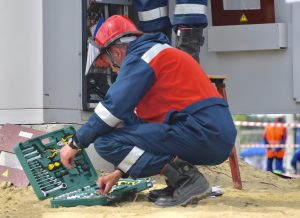
Before you apply, it helps to know what the job looks like day to day. An apprentice works under a journeyman or master electrician and starts at the unglamorous end of the trade — hauling gear, site clean-up, drilling holes, pulling wire. That is not hazing. It is how a supervisor learns what you can handle before trusting you around live circuits.
As you prove yourself, the work shifts toward real electrical tasks:
- Running and connecting wire and cable
- Testing circuits and taking measurements
- Installing lighting fixtures, receptacles, breakers, and panels
- Maintaining and repairing existing equipment
- Reading blueprints, and eventually helping draw up electrical plans
Expect that progression to take months rather than weeks, and expect it to be earned rather than scheduled. The upside is that every one of those tasks counts toward the on-the-job hours you need for your license.
One thing that worries applicants more than it should: tattoos are not a barrier in this trade. No licensing board asks about them, and on most commercial and industrial sites nobody gives them a second look. Appearance policies tend to surface only in customer-facing residential work, where an individual contractor may ask that visible tattoos be covered on the job. That is an employer’s dress code, not a rule about who is allowed to become an electrician.
1. The Prerequisites: Do You Qualify?
Before applying, ensure you meet the minimum qualifications. While specific programs may vary slightly, almost all electrical apprenticeship programs require the following:
- Age: Be at least 18 years old.
- Education: Hold a high school diploma or GED.
- Math: Have a passing grade in high school Algebra I (one full credit).
- Driver’s License: Possess a valid driver’s license and reliable transportation.
Tip: If you are missing the algebra credit, many training centers offer an online “Tech Math” course you can take to qualify.
2. The Union Route: Applying to the IBEW
For many, the goal is to join the International Brotherhood of Electrical Workers (IBEW). The union partners with the National Electrical Contractors Association (NECA) to run the training program known as the Electrical Training Alliance (formerly NJATC). However, securing a union apprenticeship is competitive and is a multi-step process.
How to Apply:
- Find Your Local JATC: You need to apply to the specific Joint Apprenticeship and Training Committee (JATC) in your area. Use the official locator tool to find programs near you.
- Submit Application: Visit the local training center’s website or office to submit your application.
- The Aptitude Test: If you meet the requirements, you will be invited to take the NJATC Aptitude Test (also called the IBEW Aptitude Test), which covers Algebra and Reading Comprehension.
- There are many free and paid practice tests and study guides for the aptitude test. A quick Google search will reveal several options; see this site for an example.
- The Interview: High scorers are invited to an interview. You will then be placed on a ranking list based on your combined score.
What Union Membership Actually Gets You
Choosing the union route is not only about how you get trained. IBEW membership works through a collective agreement, and that changes how pay and conditions are set:
- Wages are scaled, not individually negotiated. The agreement sets the rate for each classification and each apprentice year, so your pay step is known in advance rather than depending on how well you bargain.
- Benefits are bargained in. Health coverage and a pension are part of the agreement rather than something offered at an employer’s discretion.
- Dismissal requires cause. A collective agreement gives you a grievance process; without one, employment is generally at will.
- Safety is a bargained item. Member safety has been a core IBEW function since its founding, and the agreement gives members a formal route to raise unsafe conditions.
The trade-offs are dues, competitive intake, and less individual flexibility. Weigh those against the non-union route below.
3. The Non-Union Route: IEC and ABC
The non-union (merit shop) sector employs a massive portion of electricians in the U.S. and offers excellent, federally recognized apprenticeship programs. The process is often faster than the union route, with less waiting time between application and hiring. There are two main organizations in this route:
Independent Electrical Contractors (IEC)
The IEC is a premier association for merit shop electrical contractors. They have chapters nationwide that run their own apprenticeship schools.
- How to Apply: Visit the IEC website to find a chapter near you. You can often apply directly to the school or to member contractors who will sponsor your education.
- Resource: Find an IEC Apprenticeship
Associated Builders and Contractors (ABC)
ABC represents all construction trades, including electrical. They focus heavily on the “merit shop” philosophy.
- How to Apply: Locate your local ABC chapter to see their specific craft training schedules and member job boards.
- Resource: ABC Chapter Locator
4. Using Government Resources
The U.S. government maintains a database of “Registered Apprenticeships.” These are programs that have been vetted and approved by the Department of Labor (DOL) or state agencies. This is a safe way to ensure you are applying to a legitimate program that will lead to a journeyman license.
Use the Apprenticeship.gov finder tool. It aggregates listings from companies, unions, and industry associations.
- Action Step: Go to the link below and search for keywords like “Electrician Apprentice” or “Electrical Helper” in your city.
- Government Resource: Apprenticeship.gov Job Finder
5. The “Direct-to-Contractor” Approach
Many smaller electrical companies do not advertise on big job boards. They hire based on immediate need and often appreciate initiative. If you want to find work quickly, consider trying this grassroots method:
- Search Locally: Go to Google Maps and search for “Electrical Contractors in [Your City].”
- Check the Reviews: Look for companies with professional websites and good reviews (4+ stars).
- Call Them: Do not just email. Call the office and ask: “I am looking to start an apprenticeship. Are you currently hiring helpers or apprentices?”
- Visit in Person: If they are local, stop by with a printed resume. Asking for a job in person shows the kind of reliability and drive contractors are looking for.
6. How to Get Accepted: Standing Out
Because apprentice electrician jobs are in high demand, you need to stand out from the crowd.
- Highlight “Handiness”: If you have no electrical experience, list other relevant skills on your resume. Did you work in landscaping? Warehouse stocking? General construction? These show you can handle physical labor and early mornings.
- Ace the Math: If applying to the union, study for the aptitude test. This is the #1 reason candidates are rejected. There are numerous resources online to help you pass this test; see this site as an example.
- Start as a Helper: If you can’t get into a formal apprenticeship immediately, apply for “Electrical Helper” or “Material Handler” roles. This creates a path to prove your worth to an employer, who may then sponsor your apprenticeship later.
Frequently Asked Questions
Conclusion
Finding an apprenticeship is the first real test of your career. It requires research, preparation, and a bit of persistence. Whether you apply through the Electrical Training Alliance, the IEC, or directly with a local contractor, the key is to start today.
Use the links above to find the program nearest you, and take the first step toward a rewarding career. Godspeed!


Get the Free Monthly Briefing
Licensing news, study tips, and the gear worth knowing about — plus a free Apprentice Logbook when you join. One useful email a month, no spam.
Join Free →