
The Ultimate Guide to Becoming a Licensed Electrician
Last updated: July 2026
How do you become a licensed electrician?
Becoming a licensed electrician follows a clear path, though how long it takes is set by your state or local licensing authority: meet the basic requirements (18+, high school diploma or GED), enter an apprenticeship (union through the IBEW or non-union through the IEC/ABC), complete the on-the-job training hours your licensing authority requires, plus 144–200 classroom hours per year, then pass your state’s Journeyman licensing exam (an NEC-based, usually open-book test needing about 70% to pass). Best of all, apprenticeships are paid — you earn while you learn.

The demand for skilled tradespeople is at an all-time high. As the world shifts toward AI adoption, smart home technology, and infrastructure modernization, the role of the licensed electrician has become one of the most stable and well-paying careers in the labor market.
But you can’t just start running wires through a building. To become a licensed electrician, you must undergo a rigorous process of training and education, ensuring you are knowledgeable and compliant with the law. If you are looking for a career that combines technical problem-solving with hands-on work, here is everything you need to know about becoming a licensed electrician.
Phase 1: Meeting the Basic Requirements
Before you can pick up a multimeter or pull wire, you must meet the industry-standard entry requirements. While these can vary slightly by state, the baseline for becoming an apprentice is generally:
- Age: You must be at least 18 years old.
- Education: A high school diploma or GED is mandatory.
- The Math Factor: Most apprenticeship programs require you to have passed at least one year of high school algebra with a “C” or better. Electrical work involves significant calculations regarding voltage drop, load requirements, and circuitry.
- Physical Fitness: You should be able to lift heavy objects, climb ladders, and work in confined spaces.
- Color Vision: This is critical. You must be able to distinguish between color-coded wires to ensure safety and proper installation.
Phase 2: Choosing Your Path (Union vs. Non-Union)
One of the biggest decisions an aspiring electrician will make is whether to go the union or non-union route. Both lead to a license, but the experiences differ.
Union apprenticeships are typically managed through the Electrical Training Alliance (formerly JATC).
- Pros: Generally higher starting wages, excellent health and retirement benefits, and a very structured, high-quality curriculum.
- Cons: Entry is highly competitive, there can be long waiting lists, and you are bound by union rules and dues.
The Non-Union Route (IEC & ABC)
Non-union apprenticeships are often facilitated through organizations like the Independent Electrical Contractors (IEC) or Associated Builders and Contractors (ABC).
- Pros: Often easier to start immediately. It offers a “merit-shop” environment where your individual performance can lead to faster promotions.
- Cons: Benefits and pay scales can vary significantly between different contractors. You may have to be more proactive about ensuring your training hours are being tracked.
Phase 3: The Apprenticeship (The “Earn While You Learn” Years)
The heart of your training is the apprenticeship. Its length is set by the program, while the experience you need for a license is set by your licensing authority, so check both. It is a dual-track education system:

On-the-Job Training (OJT)
To qualify for a Journeyman Electrician license, you need a set amount of supervised work experience, and your licensing authority decides how much. Nebraska, for example, requires four years under Neb. Rev. Stat. 81-2109. You will work under the guidance of a Master or Journeyman electrician, starting with basic tasks like digging trenches and pulling wire, and progressing to complex troubleshooting and motor controls.
Classroom Instruction
In addition to physical labor, you must complete academic coursework.
- Requirement: Usually 144 to 200 hours per year (roughly 600–900 total hours).
- Curriculum: You will study electrical theory, blueprints, safety protocols (OSHA), and the National Electrical Code (NEC).
Phase 4: Passing the Licensing Exam
Once your hours are documented and your schooling is complete, you are eligible to sit for the Journeyman Electrician Exam.
The Format
- The Book: The exam is almost entirely based on the National Electrical Code (NEC).
- Open Book: Most states allow you to use the NEC book during the test. However, the test is timed, so you must know how to navigate the index and tables rapidly. The test is more to see how well you know the layout of the code than how much you’ve memorized.
- Question Type: Multiple-choice questions ranging from 80 to 150 questions.
- Passing Grade: Typically, you must have a minimum grade of 70 to pass the test.
The Content
Expect to be tested on:
- Calculations: Sizing branch circuits, feeders, and services.
- Grounding and Bonding: Ensuring the system is safe from electrical faults.
- Wiring Methods: Proper use of conduit, cable types, and raceways.
- Motors and Transformers: Understanding how to wire and protect heavy equipment.
- Safety: Knowledge of OSHA standards and NFPA 70E (Arc Flash safety).
Phase 5: Career Specialization and Advancement
Getting your license isn’t the finish line; it’s the starting block. Once licensed, you can specialize in several high-paying niches:
- Residential: Wiring new homes and troubleshooting domestic systems.
- Commercial/Industrial: Working on hospitals, high-rises, or manufacturing plants with high-voltage systems.
- Solar/Renewables: Installing PV panels and battery storage systems.
- Low Voltage: Focusing on security systems, fire alarms, and data networking.
- Master Electrician: After a few years as a Journeyman (usually 2 to 4), you can test for your Master’s license, which allows you to pull permits and start your own contracting business.
Pro-Tips for Success
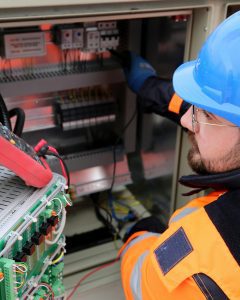
- Invest in Good Tools: Your tools are your livelihood. Start with a high-quality set of pliers, wire strippers, and a reliable multimeter.
- Stay Code-Current: The NEC is updated every three years. Stay on top of these changes to ensure your work remains legal and safe.
- Network Early: Even as an apprentice, the reputation you build with contractors and inspectors will follow you throughout your career.
Ready to get started? Contact your local trade school or apprenticeship office today to take the first step toward a career that’s always in demand. Head over to this page to see what your state’s specific requirements consist of. Godspeed!
Frequently Asked Questions


Get the Free Monthly Briefing
Licensing news, study tips, and the gear worth knowing about — plus a free Apprentice Logbook when you join. One useful email a month, no spam.
Join Free →