
Electrician Exam Rules by State (2026 Guide)
Last updated: November 2026
The short version
Whether you can bring a tabbed, highlighted code book into your electrician exam depends entirely on your state. California, Colorado, and Hawaii hand you the code book, and California now gives it to you as an on-screen PDF. Most other states let you bring your own book with permanent tabs and highlighting, but sticky notes and removable tabs are banned almost everywhere. Michigan allows no highlighting at all, and Texas allows only tabs made by the code book’s publisher. Exams use the 2020, 2023, or 2026 edition of the National Electrical Code, depending on the state, and Texas reports that fewer than one in four electrician exam attempts passed in fiscal year 2025.
Electrician licensing exams are open book, but what that means changes at the state line. One state hands you a clean code book at the door, the next lets you bring your own covered in tabs, and a third bans highlighting entirely. Study with the wrong setup, and you lose time you cannot get back on test day.
This guide compares exam-day rules across the 32 states we cover in depth: whether you can bring your own code book, what tabs and markings are allowed, which edition of the National Electrical Code the exam uses, and how many questions you get and how much time you have. Every row links to the state’s candidate information bulletin or exam page, which we read in November 2026.
Electrician Authority earns a commission from some of the links on this page, at no extra cost to you. Check your exam bulletin before you buy a code book or tabs, because the edition and the tab rules differ by state.
- Three kinds of exam room
- The state rules that catch candidates out
- Electrician exam rules by state
- Which NEC edition is your exam on?
- How much time you get, and how many people pass
- States where cities and counties give the exam
- Step-by-step checklist: getting ready for exam day
- Frequently asked questions
- The bottom line

Three kinds of exam room
Every state on this page gives an open-book exam, but the states fall into three groups. Knowing which one yours is in should shape how you study for months beforehand:
- The test center provides the book. California, Colorado, and Hawaii supply the code book, and you may not mark it. New Jersey provides the National Electrical Code for its contractor exam and does not let you use your own copy. In these states, tabs and highlighting you add at home will not be there on test day.
- You bring your own book, with permanent tabs and highlighting allowed. This is the most common setup, used by Alabama, Arizona, Arkansas, Connecticut, Delaware, Florida, Georgia, Idaho, Iowa, Ohio, Virginia, Washington, and others. Highlighting and underlining are done before the exam, tabs must be permanent, and nothing may be written in the book during the exam.
- You bring your own book, under a rule that catches people out. Michigan, Texas, Maryland, Massachusetts, North Carolina, Oregon, Kentucky, and Wisconsin each add their own rule, covered in the next section.
This is why advice about tabbing a code book conflicts so often. An apprenticeship program in a state that provides the book has good reason to tell students not to rely on tabs, while the same advice costs time in a state where a well-tabbed book is allowed. Follow the rules for the state where you will test.
The state rules that catch candidates out
These are the rules most likely to cost you an exam fee or an hour of searching if you plan around the usual setup:
- Michigan: reference materials may not have any highlights, underlining, or marks of any kind, and the code book may carry only factory markings and factory tabs, according to the PSI Michigan bulletin and the state’s exam FAQ.
- Texas: your code book may be highlighted and contain notes, but it may only be tabbed with tabs made or provided by the code book’s publisher. Homemade or other tabs must be removed, or you forfeit the exam fee and test another day, under the PSI Texas bulletin. Spiral-bound and loose-leaf copies are not allowed.
- Maryland: the PSI Maryland bulletin names the permanent tabs it accepts, bans Post-it flags, and says tabs with paper inserts will be removed. If a proctor can peel a tab off without tearing the page, it comes off.
- Massachusetts: handwritten notes in the margins of approved references are allowed if written before the exam, according to the PSI Massachusetts bulletin.
- North Carolina: notes on the pages are allowed, but notes written in pencil must be highlighted, and loose-leaf references are not allowed, according to the NCBEEC examination page and its exam handbook.
- Oregon: handwritten margin notes are allowed only when they point to another code section or to a state or local amendment, under the approved exam materials list.
- Kentucky: formulas written in pen before the exam are allowed only where the licensing jurisdiction authorizes them, under the Prov Kentucky bulletin.
- Wisconsin: tabs are allowed only if they are part of a bound code book, and removable tabs, sticky notes, loose paper, and paperclips are not allowed. The state also tells candidates not to highlight their reference material, because highlighted material will not be permitted at future exams. Printed notes are allowed if they are hole-punched into one three-ring binder with the state’s electrical rules, according to the DSPS journeyman exam page.
If a rule in your bulletin is unclear, ask the testing company before exam day. Proctors check books at the door, and they remove or confiscate anything that doesn’t meet the rules.
Before you buy tabs, check your bulletin
- In California, Colorado, and Hawaii, the test center provides the code book, so tabs you add at home will not be there on exam day.
- Texas allows only tabs made or provided by the code book’s publisher.
- Michigan allows only factory tabs and no highlighting, so ask PSI before you add anything.
- Wisconsin accepts tabs only if they are part of a bound code book, and warns against highlighting.
- Sticky notes and removable tabs are banned almost everywhere. Tabs must be permanent.
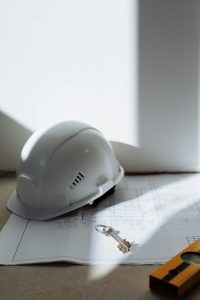
If your state allows tabs, the NFPA, which publishes the code, sells self-adhesive index tabs made for each edition: tabs for the 2026 NEC and tabs for the 2023 NEC. Because they come from the publisher, Texas allows them. Third-party sets such as Mike Holt’s tabs for the 2023 NEC are permanent tabs too, and most bring-your-own states accept them, but Texas and Michigan do not. Match the tabs to the edition your exam uses.
Electrician exam rules by state
These 25 states give a state-level electrician or electrical contractor exam. The format column shows the journeyman exam where the state has one, and the contractor exam where it licenses only contractors. Each state name links to our full guide, and the last column links to the bulletin or page the row comes from.
| State | Code book | Tabs and markings | NEC edition | Exam format | Source |
|---|---|---|---|---|---|
| Alabama | Bring your own | Permanent tabs; highlight or underline before; no handwritten notes | 2023 | 80 questions, 4 hours, 75% to pass | Prov bulletin |
| Alaska | Bring your own | Check bulletin | 2020 | 4 hours maximum, 70% to pass | Alaska DOL |
| Arizona | Bring your own | Permanent tabs only; highlight or underline before | 2020 or 2023 | Contractor exam, 270 minutes | PSI reference list |
| Arkansas | Bring your own | Permanent tabs; highlight or underline in pen; no handwritten notes | 2020 | 60 questions, 3 hours, 70% | Prov bulletin |
| California | Provided as an on-screen PDF | Nothing brought in | 2023 | 100 questions, 4.5 hours, 70% | DIR bulletin |
| Colorado | Provided, with a formula page | No writing, highlighting, or tabs | 2026 (from Aug. 1, 2026) | 90 scored questions, 4 hours, 70% | PSI bulletin |
| Connecticut | Bring your own | Highlight, underline, or annotate before; permanent tabs only | 2020 or 2023 | 80 questions, 3.5 hours, 70% | PSI bulletin |
| Delaware | Bring your own | Permanent tabs; highlight or underline in pen; no index sheets | 2023 | 70 questions, 3 hours, 75% | Prov bulletin |
| Florida | Bring your own | Permanent tabs; no Post-it notes; printed references must be bound | 2023 (2026 from Aug. 21, 2027) | Contractor: 50-question business and 100-question technical sections | DBPR bulletin |
| Georgia | Bring your own | Highlight, underline, permanent tabs; no notes | Check bulletin | Contractor exam in two 4-hour parts | PSI bulletin |
| Hawaii | Provided | Not applicable | 2020 | 70 questions, 3 hours, 70% | PSI bulletin |
| Idaho | Bring your own, in a three-ring binder if printed | Highlight, underline, permanent index before; no Post-its | 2020 or 2023 | 100 questions, 4.5 hours, 70% | PSI bulletin |
| Iowa | Bring your own | Highlight, underline, index before; permanent tabs only | 2023 | 80 scored questions, 3 hours, 70% | PSI bulletin |
| Kentucky | Bring your own | Permanent tabs; highlight or underline in pen; formulas only if authorized | 2023 | 80 questions, 3 hours, 70% | Prov bulletin |
| Maryland | Bring your own | Named permanent tab brands only; no Post-it flags | 2020 | 70 questions, 3.5 hours, 70% | PSI bulletin |
| Massachusetts | Bring your own | Tabs, highlighting, and handwritten margin notes allowed | The code the board has adopted | 80 questions, 3 hours, 70%, plus a 30-question applied part | PSI bulletin |
| Michigan | Bring your own | No highlighting or marks; factory tabs only | 2023 | 80 questions, 2.5 hours, 75% | PSI bulletin |
| New Jersey | NEC provided; bring other references | Your own references: permanent tabs, highlighting before | 2023 | Contractor: 100 questions, 260 minutes, 70% | PSI bulletin |
| North Carolina | Bring your own | Permanent tabs; notes allowed, pencil notes highlighted | 2020 | Contractor: 100 questions, 6 hours, 70% | NCBEEC |
| Ohio | Bring your own | Permanent tabs only; highlight before | 2023 | Contractor: 100 questions, 4 hours, 70% | PSI bulletin |
| Oregon | Bring your own | Tabs and highlighting; margin notes only for code references | Oregon’s adopted code, with amendments | 75% to pass | Approved materials |
| Texas | Bring your own, soft-bound | Highlighting and notes before; publisher-made tabs only | 2026 (from Sept. 1, 2026) | 59-question knowledge and 26-question calculations portions, 70% on each | PSI bulletin |
| Virginia | Bring your own | Highlight, underline, index before; permanent tabs only | 2020 | 70 questions, 3.5 hours, 49 correct to pass | PSI bulletin |
| Washington | Bring your own, plus printed state laws and rules | Highlighting, underlining, permanent index tabs; no notes | 2020 | 70% on each section | L&I |
| Wisconsin | Bring your own, plus printed notes and state rules in one binder | Tabs only if part of a bound code book; no removable tabs or sticky notes; no highlighting | 2023 (from Sept. 1, 2026) | 4 hours at Pearson VUE, 70% to pass | DSPS |
Bulletins change, sometimes more than once a year, so treat this table as a starting point. Download your own bulletin when you schedule, and check its date against this page.
Which NEC edition is your exam on?
The edition matters because article numbers and requirements move between editions, and a question written for one edition can have a different answer in another. Several states changed recently:
- Texas moved to the 2026 edition on September 1, 2026, according to the TDLR exam page. Older copies of the Texas bulletin still describe the 2023 edition.
- Colorado moved to the 2026 edition on August 1, 2026, and provides that edition at the test center, according to the PSI Colorado bulletin.
- Florida uses the 2023 edition and will switch to the 2026 edition on August 21, 2027, according to the DBPR bulletin.
- Michigan bases its questions on the 2023 edition but lets candidates use other editions in the exam room, according to the PSI Michigan bulletin.
- Wisconsin moved to the 2023 edition on September 1, 2026, when the state’s electrical code, SPS 316, adopted it. The exam allows the 2023 code or the 2023 NEC Handbook.
- Idaho, Arizona, and Connecticut accept either the 2020 or 2023 edition.
Buy or borrow the edition your bulletin names. If you already own a different one, check whether your state lets you use it before you spend weeks learning its layout. You can buy current editions from the NFPA, which publishes the code, or from Amazon. Choose the softbound version, because Texas does not allow spiral-bound or ring-bound copies:
- 2026 National Electrical Code: Texas and Colorado test on it now, and Florida switches to it on August 21, 2027.
- 2023 National Electrical Code: used by California, Michigan, Kentucky, Iowa, Alabama, Delaware, Ohio, New Jersey, Wisconsin, and Florida until its switch.
- 2020 National Electrical Code: used by Washington, Virginia, North Carolina, Arkansas, Hawaii, Maryland, and Alaska.
- 2023 NEC Handbook: allowed alongside or instead of the code in some states, such as Iowa, Ohio, and Wisconsin. Check your bulletin first.
How much time you get, and how many people pass
Most state journeyman exams give you 60 to 100 questions and 2.5 to 4.5 hours, which works out to roughly two to three minutes a question. That is enough time to look up most answers, but not all of them, so finding things quickly in your book matters as much as knowing the material.
Few states publish pass rates. Texas does, in its fiscal year 2025 exam statistics, and the numbers show how hard these exams are:
- Journeyman NEC portion: 1,402 of 5,731 attempts passed, or 24.46 percent.
- Journeyman calculations portion: 1,301 of 6,328 attempts passed, or 20.56 percent.
- All electrician exams combined: 6,181 of 26,303 attempts passed, or 23.50 percent.
These are pass rates per attempt, so they count people who retake the exam more than once. They still show that failing the first time is common. Texas split its journeyman exam into the two portions on March 11, 2025, and each portion now has its own time limit, according to the TDLR exam page.
Practice under the same conditions you will face. Use the same kind of book you will have on test day, time yourself, and work through full sets of questions. Our free NEC practice test is one place to start, and our guide to what to expect on the journeyman exam covers how the exam is built.
States where cities and counties give the exam
In seven of the states we cover, there is no statewide journeyman exam. The rules for your exam come from the city or county that issues the license, or from the national exam it accepts:
- Illinois: no state license. Chicago and other cities choose their own exams, and some use testing companies such as Continental Testing.
- Indiana: no state license. Cities and counties set their own exams, often using national exams from the International Code Council.
- Kansas: no state license. Counties and cities set the exam, commonly an International Code Council exam.
- New York: no state license. New York City and other cities run their own licensing and exams.
- Pennsylvania: no state license. Philadelphia, Pittsburgh, and other cities set their own rules, and many use International Code Council exams delivered through Pearson VUE.
- Missouri: the state licenses electrical contractors and accepts the national exams on its approved examinations list; cities license journeymen.
- Tennessee: the state licenses contractors and limited licensed electricians through Prov, and large cities give their own journeyman exams.
If your exam is local, ask the licensing office which exam it uses, then find that exam’s own bulletin. The rules on tabs and books come from the testing company, not the city.
Step-by-step checklist: getting ready for exam day
Use this alongside your state’s bulletin, such as the California bulletin or the Texas bulletin.
- Download your bulletin as soon as you are approved to test, and check the date.
- Find out who provides the book. If the test center provides it, study with a clean, unmarked copy.
- Get the right edition of the National Electrical Code and any other references the bulletin lists.
- Tab and highlight by the rules: permanent tabs only, nothing removable, and no handwritten notes unless your state allows them.
- Bind printed references the way your bulletin requires, usually spiral-bound or in a binder.
- Practice under a time limit with the same book you will use on exam day.
- Check your ID against the bulletin’s requirements, since an expired ID can cost you the appointment.
Frequently asked questions

The bottom line
Electrician exams are open book everywhere on this page, but the book you get and what you can do to it are set state by state. Before you study, find out whether your state provides the code book, which edition it uses, and which tabs and markings it allows. Then practice with that setup, under a time limit, so exam day holds no surprises. Your state’s bulletin, such as the Washington exam page, is the final word. Godspeed!
This article is for informational and educational purposes only. Exam rules, code editions, and formats change and differ by state and locality. Confirm current requirements in your state’s candidate information bulletin or with your licensing board before you test. Electrician Authority earns a commission from some links on this page.


Get the Free Monthly Briefing
Licensing news, study tips, and the gear worth knowing about — plus a free Apprentice Logbook when you join. One useful email a month, no spam.
Join Free →