
Electrician vs. Lineman: Choosing Your Path in the Power Industry
The electrical industry is the backbone of modern civilization. Without the professionals who maintain the grid and the systems within our buildings, our high-tech world would grind to a halt. However, when people think about “electrical work,” they often lump everyone into the same category. In reality, the industry is split into two very distinct career paths: Inside Wiremen (Electricians) and Outside Linemen (Lineworkers).
While both trades work with electricity, their daily lives, safety risks, and skill sets are vastly different. If you are considering a career in blue-collar work, understanding these nuances is critical to choosing a path that fits your lifestyle and financial goals.
Defining the Roles: Inside vs. Outside
To understand the difference, think of the electrical grid as a massive delivery system. The Lineman is responsible for the “delivery” of power from the generating plant to the building, while the Electrician is responsible for what happens once that power reaches the structure.
What is an Electrician (Inside Wireman)?
An electrician, specifically an Inside Wireman, installs and maintains the electrical systems within residential, commercial, and industrial buildings. They handle everything from the service entrance—where the utility power connects to the building—to the final light switch or machinery motor.
Common Responsibilities:
- Installing conduit systems (raceways) to protect wiring.
- Wiring lighting, HVAC systems, and security alarms.
- Troubleshooting complex circuitry in factories or hospitals.
- Ensuring all work complies with the National Electrical Code (NEC).
What is a Lineman (Outside Lineman)?
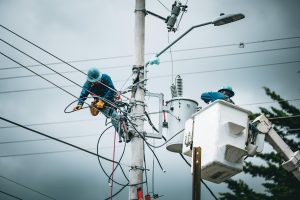
An Outside Lineman works on the infrastructure that transports high-voltage electricity across the country. This includes the massive transmission towers you see along highways and the distribution lines (both overhead and underground) that run through neighborhoods.
Common Responsibilities:
- Climbing utility poles or operating bucket trucks.
- Installing and repairing transformers, insulators, and breakers.
- Stringing high-voltage power lines.
- Responding to emergency outages during storms or natural disasters.
Work Environment: What’s Your Office Like?
The most immediate difference between these two trades is where you spend your time. For some, the idea of being stuck in a building all day is a dealbreaker; for others, the idea of working in a blizzard is a nightmare.
The Electrician’s Environment
Electricians primarily work indoors, though “indoors” can vary wildly. You might be in a climate-controlled office building one week and a dusty, unheated construction site the next.
- Predictability: Electricians often have more stable schedules, typically working a standard 40-hour week unless they are in specialized service roles.
- Physical Constraints: While they avoid the elements, electricians often work in cramped spaces—think crawlspaces, attics, and electrical closets.
The Lineman’s Environment
Linemen are the “ultimate” outdoor workers. They are at the mercy of the weather.
- Extreme Conditions: When everyone else is staying home because of a hurricane or ice storm, the lineman is heading out to fix the lines.
- Heights and Hazards: A lineman’s day often involves being 40 to 100 feet in the air or working in deep underground vaults.
- Travel: Depending on the employer, linemen may need to travel extensively to areas where the grid needs expansion or emergency repair.
Training and Education: The Path to Journeyman Status
Both trades follow the traditional apprenticeship model, which combines paid on-the-job training with classroom instruction. However, the specific skills taught are tailored to the different voltages and equipment used in each field.
The Electrician Apprenticeship
An electrician apprenticeship typically lasts 4 to 5 years. To become a licensed journeyman, you must complete approximately 8,000 hours of field experience and several hundred hours of classroom time.

- Core Focus: Theory of electricity, blueprint reading, motor controls, and strict adherence to the NEC.
- Certification: In most states, you must pass a state-administered exam to earn your journeyman license.
- Programs: There are both union and non-union (or merit-based) apprenticeship programs.
The Lineman Apprenticeship
Lineman training also takes about 4 years (7,000 to 8,000 hours), but it emphasizes physical skills and high-voltage safety.
- Climbing School: One of the first hurdles for an apprentice lineman is “climbing school,” where you learn to navigate wooden poles using gaffs (spikes) and safety belts.
- CDL Requirement: Almost all linemen must obtain a Class A Commercial Driver’s License (CDL) to operate the heavy bucket trucks and digger derricks used on the job.
- Joint Programs: Many linemen train through the Electrical Training Alliance, a partnership between the National Electrical Contractors Association (NECA) and the International Brotherhood of Electrical Workers (IBEW).
Tools of the Trade: Specialized Gear
The toolboxes of these two professionals look very different. An electrician’s tools are designed for precision and variety, while a lineman’s tools are designed for heavy-duty power and high-voltage insulation.
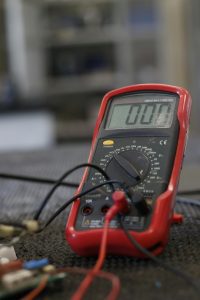
- Hand Tools: Wire strippers, needle-nose pliers, conduit benders, and multimeters.
- Power Tools: Hammer drills, impact drivers, and specialized knockout sets for creating holes in metal panels.
- Testing Equipment: Circuit tracers and digital testers to ensure systems are safe and functional.
Lineman Tools
- Hot Sticks: Long, insulated fiberglass poles that allow linemen to work on energized lines from a safe distance.
- Climbing Gear: Gaffs, pads, and fall-arrest harnesses.
- Heavy Machinery: Hydraulically operated bucket trucks, augers, and tensioners for stringing wire.
- PPE: High-voltage rubber gloves and “Faraday” suits for live-line work, which protect the worker from the massive electrical fields present around high-tension lines.
Salary and Job Outlook for 2026
As of 2026, both trades are seeing record demand due to the massive push for grid modernization and the expansion of EV (Electric Vehicle) infrastructure.
| Metric | Electrician (Inside Wireman) | Lineman (Outside Lineworker) |
| 2025 Median Salary | ~$63,190 | ~$95,320 |
| 2026 Salary Potential | $85,000+ (Specialized) | $120,000+ (With Overtime) |
| Growth Projection | 9% (Faster than average) | 7% (Faster than average) |
| Primary Industry | Construction / Maintenance | Utilities / Energy Generation |
Data sourced from the U.S. Bureau of Labor Statistics (BLS).
Why the pay gap?
The higher median salary for linemen is primarily a “danger and inconvenience” premium. Linemen work with higher voltages (often thousands of volts, compared with the 120V to 480V common for electricians), work in more dangerous weather, and are subject to mandatory on-call shifts. However, many master electricians in specialized industrial sectors can easily match or exceed lineman pay.
Safety and the Physical Toll
Electricity is inherently dangerous, but the risks manifest differently in the two trades.
The Electrician’s Risks
- Arc Flash: This is the primary danger for electricians—a sudden release of energy caused by a fault.
- Repetitive Strain: Years of pulling wire, bending conduit, and working overhead can lead to shoulder and wrist issues.
- Confined Spaces: Working in attics and crawl spaces carries risks of respiratory issues and heat exhaustion.
The Lineman’s Risks
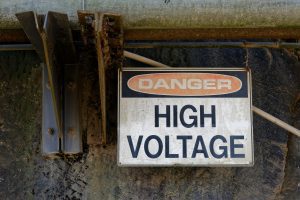
- Electrocution: Because linemen work with high-voltage distribution, the margin for error is razor-thin. They follow strict OSHA 1910.269 regulations, which often require two qualified workers for high-risk tasks.
- Falls: Even with modern safety harnesses, working at extreme heights remains a risk.
- Joint Damage: Climbing poles and handling heavy equipment in awkward positions often leads to knee and back replacements later in life.
Key Comparison Points at a Glance
- Voltage: Electricians usually work with “low” voltage (up to 600V), while linemen work with “high” voltage (up to 500kV or more).
- Employer: Electricians often work for private contractors or on their own; linemen usually work for utility companies or large infrastructure firms.
- Lifestyle: Electricians usually have a better balance between “home every night” and “on the road.” Linemen can be gone for weeks at a time on storm restoration “tramp” work.
- Versatility: Electricians have a broader range of potential niches (solar, residential, industrial, automation). Linemen have a more specialized, focused career path.
How to Choose: Which Trade Fits You?
If you are trying to decide between these two paths, ask yourself the following questions:
- Do you crave stability or adventure? If you want to know exactly where you’ll be at 8:00 AM every Monday, check the electrician’s route. If you like the idea of flying to a different state to help restore power after a hurricane, consider linework.
- How do you feel about heights? Most electricians use ladders; linemen use poles and towers. If you have a fear of heights that you can’t shake, linework will be a struggle.
- What is your financial goal? Linework generally offers a higher starting salary and more overtime. However, electricians have a lower barrier to entry for starting their own business and becoming entrepreneurs.
- How do you handle the weather? If you hate being cold, wet, or sweltering in the sun, stick to inside wireman work.
The Future of the Electrical Trades
By 2026, the lines between these trades are blurring slightly in specific sectors, such as Renewable Energy Integration.
- Smart Grids: Linemen are now working with sophisticated digital sensors and automated switches on the lines.
- EV Infrastructure: Electricians are installing massive charging hubs that require higher voltage service entrances, bridging the gap between traditional indoor work and utility-scale power.
Both careers offer incredible job security. As the world expands its power sources and uses, the demand for skilled hands will only increase. Whether you decide to work inside a skyscraper or atop a utility pole, you are entering a field that is essential, respected, and highly rewarding. Godspeed!


Get the Free Monthly Briefing
Licensing news, study tips, and the gear worth knowing about — plus a free Apprentice Logbook when you join. One useful email a month, no spam.
Join Free →